The platform

Specification is human. Execution is autonomous. Governance is deterministic.

No layer is permitted to do another layer’s job. That separation is the product — everything else is an implementation detail of it.

How it runs a company

Three stages. One closed loop.

Human intent enters once, at the top. Everything below it is machine-executed and continuously corrected against live operational data.

  1. 01

    Axiomatic system design

    Leadership establishes the non-negotiable core: operating constraints, capital allocation, unit economics, and business logic. These are written as machine-enforceable declarations — not documents, not decks.

  2. 02

    Multi-agent orchestration

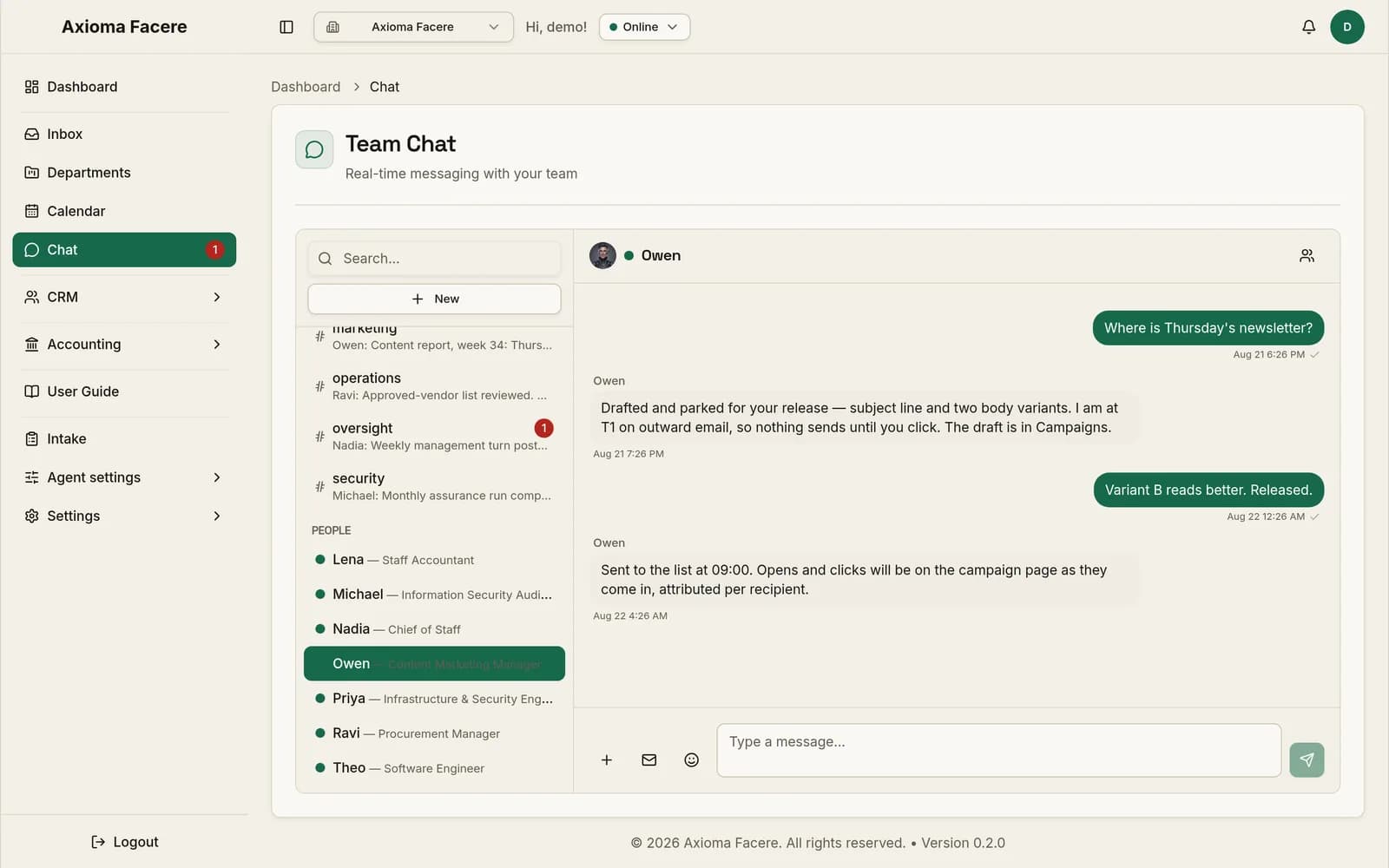
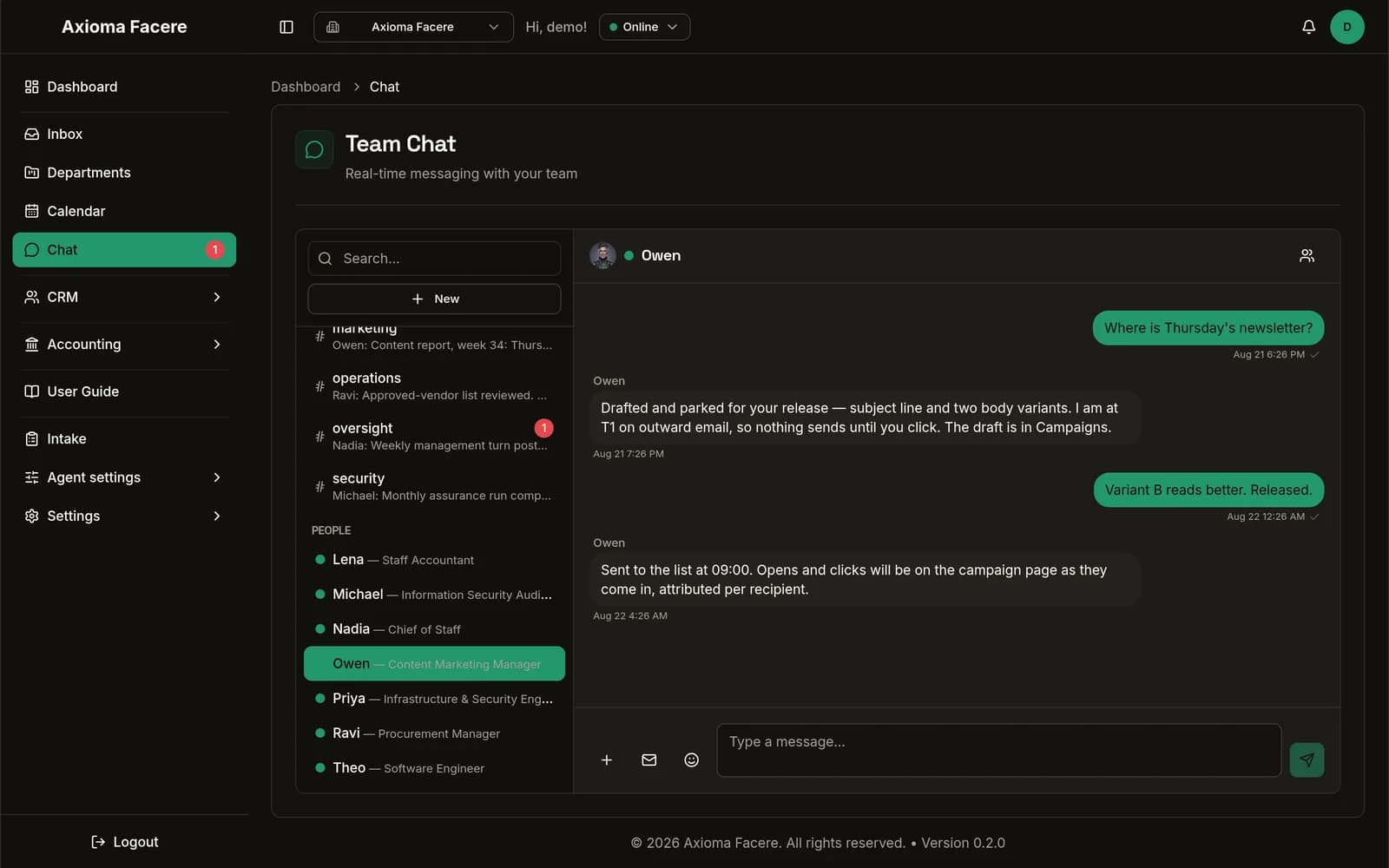
    Specialized autonomous agents assume ownership of operational verticals — engineering, marketing, sales operations, support — coordinating through shared state rather than through meetings.

  3. 03

    Closed-loop correction

    Output is evaluated against real operational and revenue data. Parameters are refined, axioms are revised where they were wrong, and throughput scales without adding coordination overhead.

The architecture

Three layers, cleanly separated.

Each layer has exactly one job and is prevented — in code — from taking on another’s.

01

The axiom layer

Intent to logic

Business goals become machine-enforceable rulesets. Unit economics, brand constraints, product specifications, spend authority and target-market parameters are expressed as structured declarations the runtime validates against.

  • Structured axiom declarations, versioned like code
  • Capital allocation and spend tiers enforced server-side
  • Success and stop criteria registered before an initiative starts
02

The execution engine

Autonomous multi-agent operations

Stateful agent networks take ownership of operational verticals and run them continuously — building, shipping, selling and supporting without a queue of human handoffs between each step.

  • Product & code generation — autonomous build, test and maintenance routines
  • Asset & campaign orchestration — programmatic creation, distribution, optimization
  • Revenue operations — pipeline execution against live commercial data
03

Governance & telemetry

Deterministic control

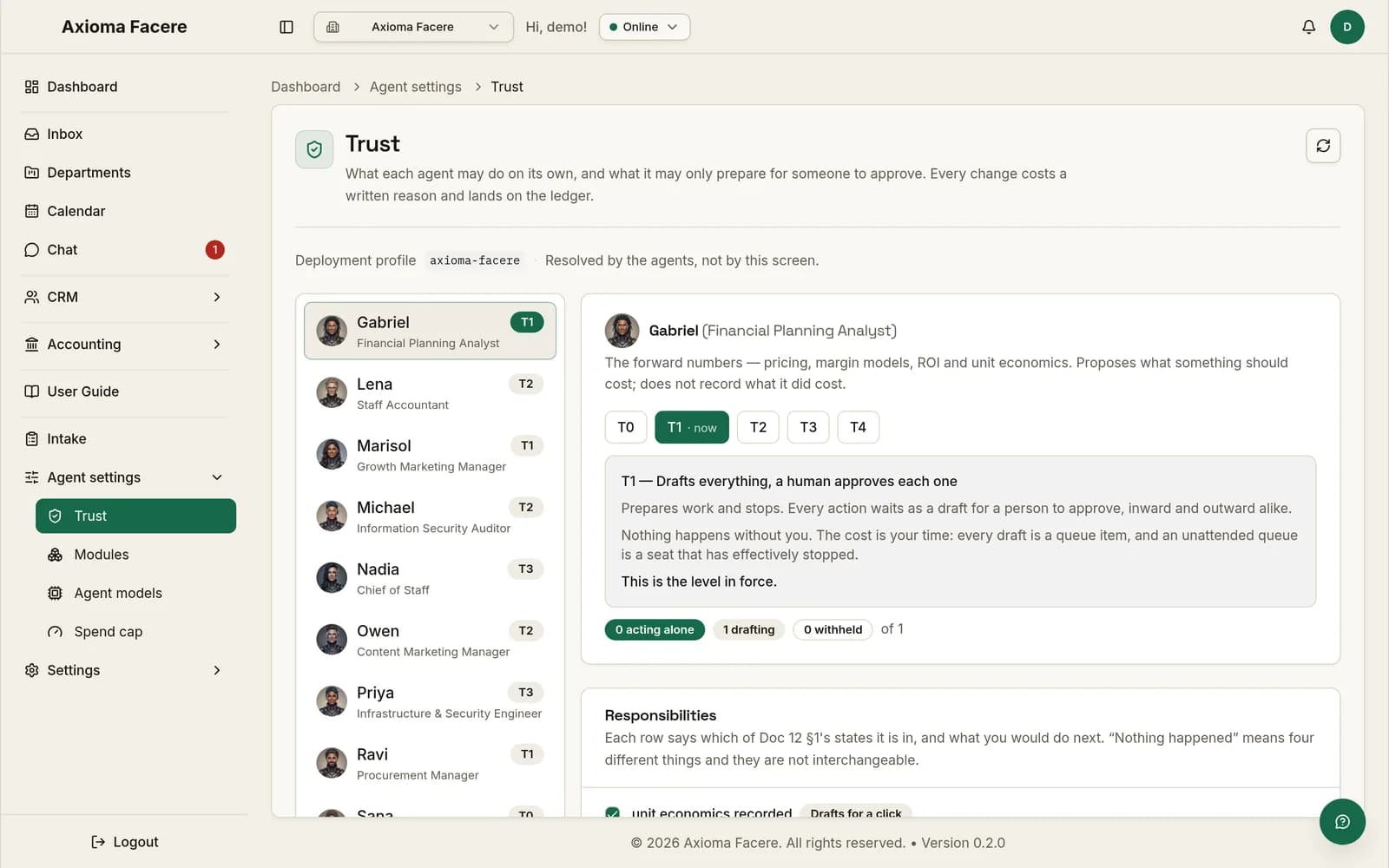
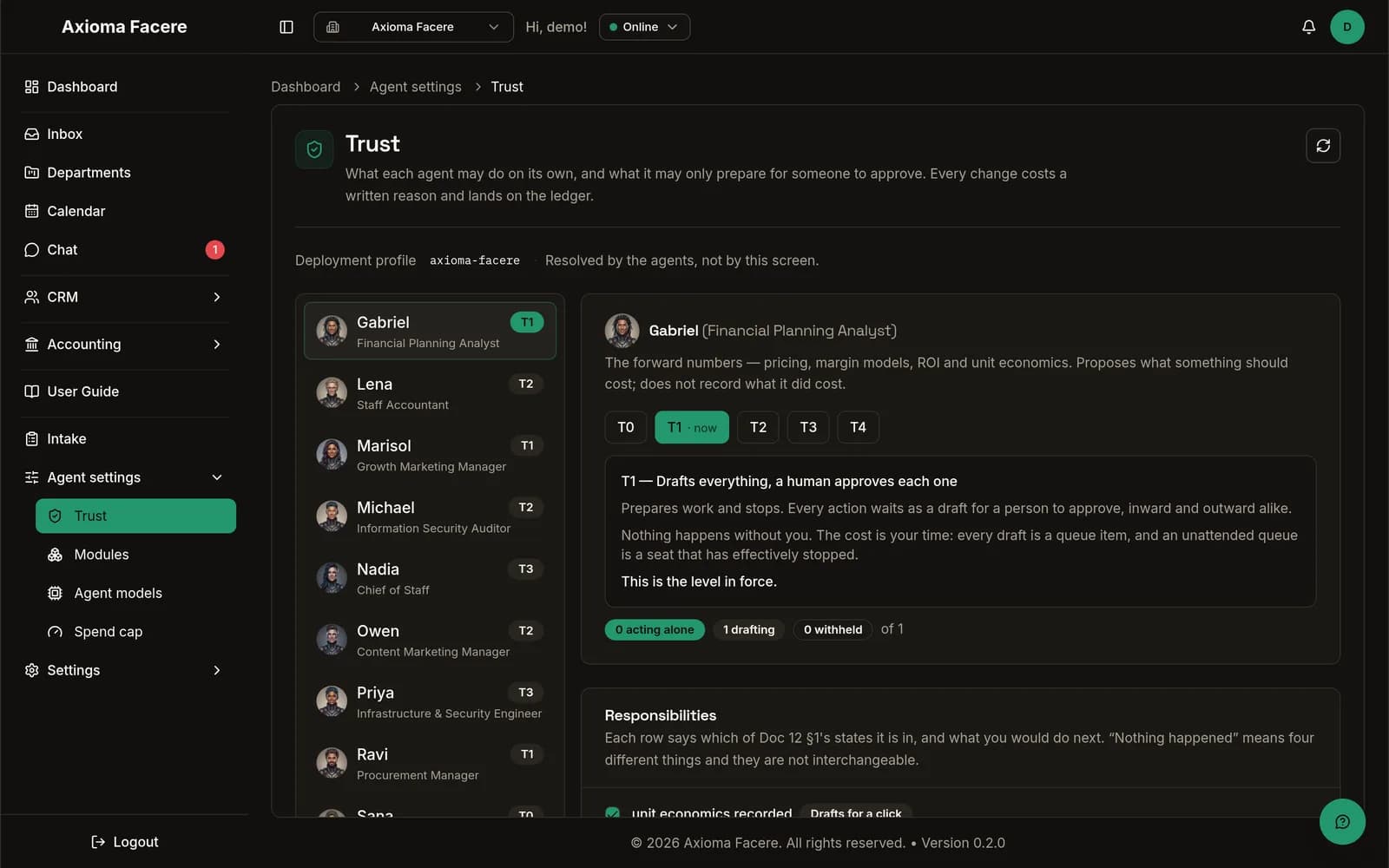
Every action, output and state change is logged and audited against the declared axioms. When a metric strays, the system alters the execution parameters — never by managing people, but by revising the formula.

  • Full attribution and cost accounting on every agent turn
  • Hard constraints enforced in code, not by trusting a model to behave
  • Escalation to the human specification layer for irreversible decisions

A detail worth the whole section

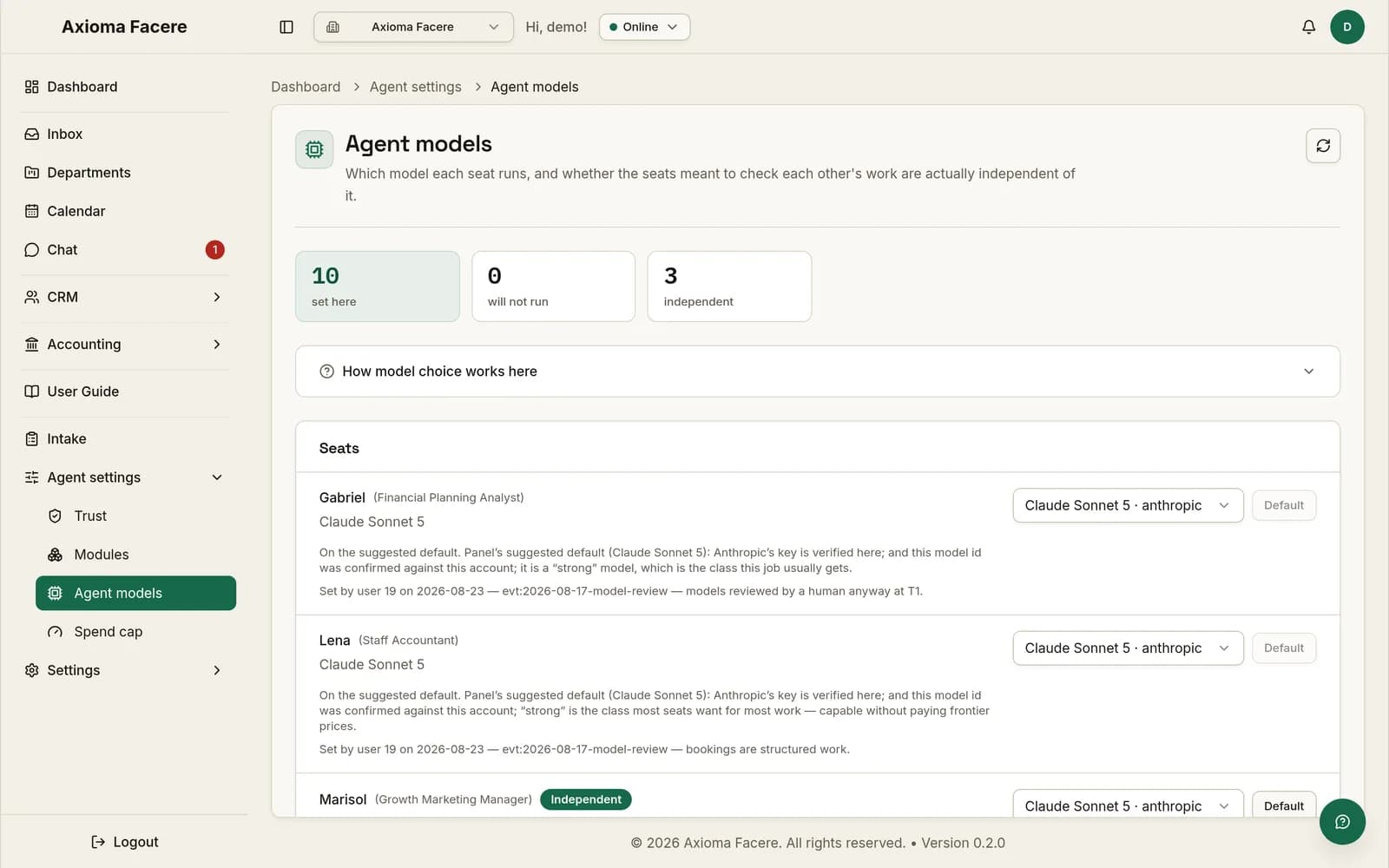
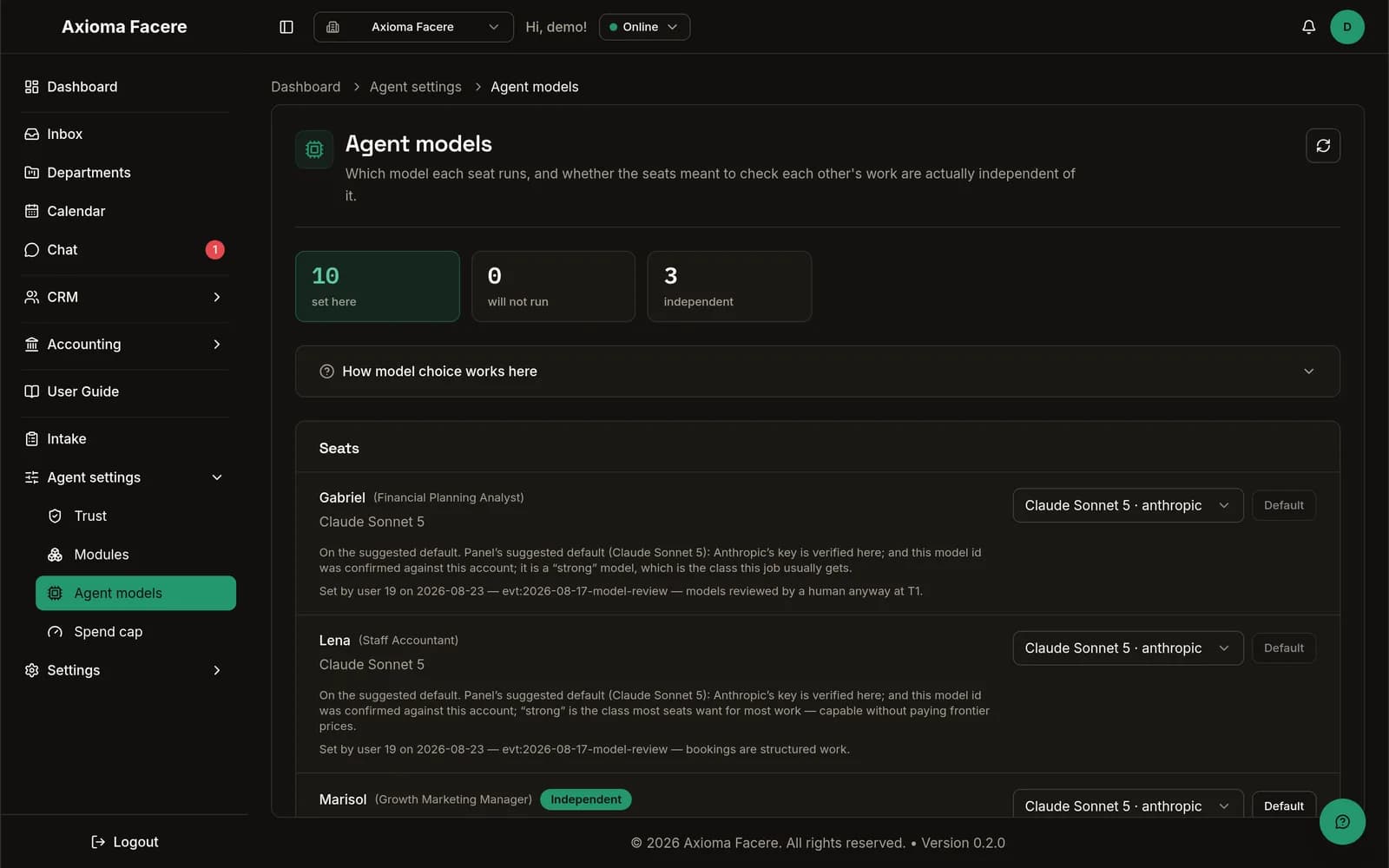
The second opinion runs on a different vendor.

An agent that reviews another agent’s work is only a control if it can disagree. Two models from one vendor share a training lineage and much of a failure surface — the reviewer inherits the blind spots of the thing it is reviewing and agrees with the mistake it existed to catch, while reporting that it ran.

So model independence is a constraint the runtime enforces, not a convention. Assurance seats are pinned to a different provider from the seats they audit, the pairing is refused server-side if it would collapse, and the check is repeated on deployment because a deployment once quietly reverted it.

The architecture is easier to see running.

A demo walks the three layers against a problem you bring.